

Can a portable ultrasound probe be used for musculoskeletal imaging?
In recent years, the advent of portable ultrasound probes has revolutionized the field of medical and veterinary imaging. These compact devices offer the flexibility and convenience that traditional large - scale ultrasound machines lack. One area where the use of portable ultrasound probes is being increasingly explored is musculoskeletal imaging. As a leading Portable Ultrasound Probe supplier, I am excited to delve into the question: Can a portable ultrasound probe be used for musculoskeletal imaging?
The Basics of Musculoskeletal Imaging
Musculoskeletal imaging is crucial for diagnosing a wide range of conditions related to muscles, bones, tendons, ligaments, and joints. Common issues that require imaging include fractures, sprains, strains, tendonitis, and joint disorders such as arthritis. Traditional imaging methods for the musculoskeletal system include X - rays, computed tomography (CT) scans, and magnetic resonance imaging (MRI). Each of these methods has its own advantages and limitations.
X - rays are excellent for detecting bone fractures but are less effective in visualizing soft tissues. CT scans provide detailed cross - sectional images of bones and some soft tissues, but they involve exposure to ionizing radiation. MRI offers high - resolution images of both bones and soft tissues without radiation, but it is expensive, time - consuming, and requires the patient to lie still in a confined space, which can be challenging for some individuals.
The Advantages of Portable Ultrasound Probes for Musculoskeletal Imaging
Real - Time Imaging
One of the most significant advantages of portable ultrasound probes is their ability to provide real - time imaging. This allows the clinician to observe the musculoskeletal structures in motion, which is particularly useful for diagnosing dynamic conditions such as tendon injuries during movement. For example, in cases of Achilles tendonitis, real - time ultrasound can show how the tendon behaves during ankle flexion and extension, providing valuable information about the extent and nature of the injury.
Portability and Convenience
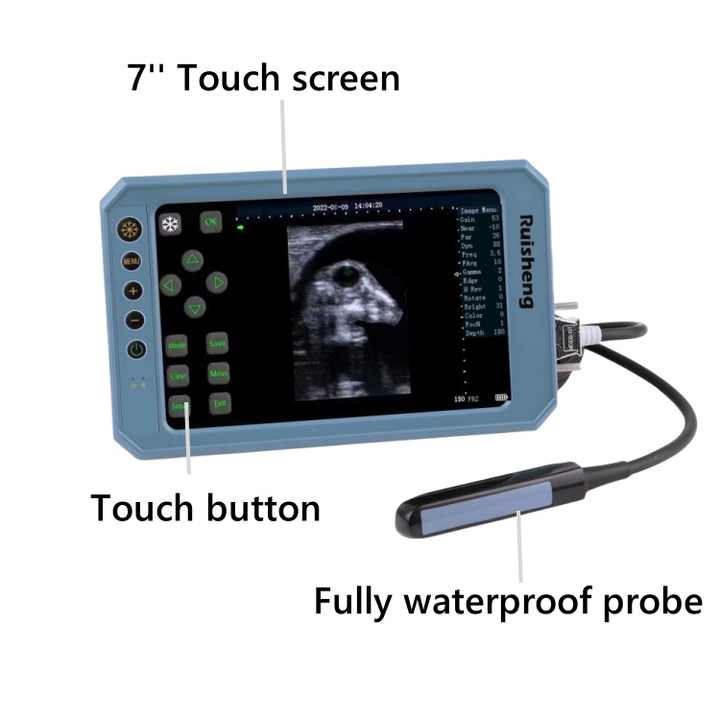
As the name suggests, portable ultrasound probes are lightweight and easy to carry. They can be used at the patient's bedside, in the clinic, or even in the field. This is especially beneficial for athletes who may need immediate evaluation of an injury during a game or training session. In veterinary medicine, portable ultrasound probes are also highly advantageous. For instance, when dealing with large animals like horses, it is much more practical to bring the imaging device to the animal rather than transporting the animal to a specialized imaging facility. You can learn more about Portable Ultrasound For Horse on our website.
Cost - Effectiveness
Portable ultrasound probes are generally more affordable than traditional imaging equipment. They also have lower operating costs, as they do not require a dedicated room or extensive infrastructure. This makes them a more accessible option for smaller clinics, mobile healthcare units, and developing regions where resources may be limited.
Safety
Unlike CT scans, ultrasound imaging does not involve ionizing radiation, making it a safer option, especially for repeated examinations. This is particularly important for patients who may require long - term monitoring of musculoskeletal conditions.
Limitations of Portable Ultrasound Probes in Musculoskeletal Imaging
Limited Penetration and Field of View
Portable ultrasound probes typically have a limited penetration depth compared to larger, stationary ultrasound machines. This can be a problem when imaging deep - seated structures or large animals. Additionally, the field of view may be smaller, which can make it challenging to visualize large anatomical regions in a single image.
Operator Dependence
The quality of ultrasound images is highly dependent on the skill and experience of the operator. Interpreting musculoskeletal ultrasound images requires specialized training, as the normal and abnormal appearances of muscles, tendons, and ligaments can be complex. Inadequate training can lead to misdiagnosis or missed findings.
Image Quality
While portable ultrasound technology has improved significantly, the image quality may still be inferior to that of MRI or high - end CT scans in some cases. This can be a limitation when trying to detect subtle abnormalities or for detailed anatomical studies.
Applications of Portable Ultrasound Probes in Musculoskeletal Imaging
Tendon and Ligament Injuries
Portable ultrasound probes are commonly used to diagnose and monitor tendon and ligament injuries. They can accurately identify tears, inflammation, and other pathologies. For example, in cases of rotator cuff tears in the shoulder, ultrasound can show the extent of the tear, the presence of fluid in the joint, and any associated muscle atrophy.
Muscle Injuries
Muscle strains and contusions can also be effectively evaluated using portable ultrasound. The probe can visualize the location and severity of the injury, as well as monitor the healing process over time. This is valuable for athletes and patients recovering from trauma.
Joint Disorders
In the assessment of joint disorders such as arthritis, portable ultrasound can detect joint effusion, synovial thickening, and cartilage damage. It can also be used to guide joint injections, ensuring accurate placement of medications into the joint space.
Veterinary Musculoskeletal Imaging
In veterinary medicine, portable ultrasound probes are becoming increasingly popular for musculoskeletal imaging. They are used to diagnose injuries in horses, dogs, and other animals. For example, in horses, portable ultrasound can be used to detect tendon and ligament injuries in the legs, which are common in athletic horses. You can explore more about Veterinary Portable Ultrasound Scanner and Mobile Vet Ultrasound on our website.
Conclusion
In conclusion, portable ultrasound probes can be a valuable tool for musculoskeletal imaging. They offer several advantages, including real - time imaging, portability, cost - effectiveness, and safety. However, they also have some limitations, such as limited penetration, operator dependence, and potentially lower image quality. Despite these limitations, with proper training and appropriate patient selection, portable ultrasound probes can provide useful diagnostic information for a variety of musculoskeletal conditions.
As a Portable Ultrasound Probe supplier, we are committed to providing high - quality products that meet the needs of medical and veterinary professionals. Our portable ultrasound probes are designed to offer reliable performance and ease of use. If you are interested in exploring the benefits of portable ultrasound for musculoskeletal imaging, we invite you to contact us for a detailed discussion and to learn more about our product range. We look forward to the opportunity to partner with you in improving patient care through advanced imaging technology.

References
- Berman L, Bonakdarpour A. Musculoskeletal ultrasound: a practical review. AJR Am J Roentgenol. 2010;194(3):707 - 716.
- Blaivas M, Lyon M, Duggal S. Focused assessment with sonography for trauma (FAST): results from an international consensus conference. J Ultrasound Med. 2008;27(11):1451 - 1466.
- Wilson SR, Carboneau JW, Dietrich CF, et al. ACR - SIUMB practice parameter for the performance of musculoskeletal ultrasound. J Am Coll Radiol. 2013;10(7):484 - 491.