

Can veterinary ultrasound probes be used for detecting ear diseases in animals?
In the realm of veterinary medicine, the quest for accurate and efficient diagnostic tools is an ongoing journey. One such area of exploration is the potential use of veterinary ultrasound probes for detecting ear diseases in animals. As a supplier of high - quality Veterinary Ultrasound Probes, I've witnessed firsthand the advancements in this technology and its diverse applications. In this blog, we'll delve into the feasibility of using these probes for ear disease detection in animals.
Understanding Veterinary Ultrasound Probes
Veterinary ultrasound probes are essential components of ultrasound imaging systems used in veterinary clinics. They work by emitting high - frequency sound waves into the body of an animal. When these sound waves encounter different tissues, they bounce back as echoes, which are then converted into visual images on a monitor. This technology allows veterinarians to visualize internal organs, detect abnormalities, and make informed diagnostic decisions.
There are various types of veterinary ultrasound probes available, each designed for specific applications. For example, linear probes are commonly used for imaging superficial structures, while convex probes are better suited for deeper tissue imaging. The choice of probe depends on the size of the animal, the area to be examined, and the type of information required.
The Anatomy of the Animal Ear
Before discussing the use of ultrasound probes for ear disease detection, it's important to understand the anatomy of the animal ear. The ear of an animal is divided into three main parts: the outer ear, the middle ear, and the inner ear.
The outer ear consists of the pinna (the visible part of the ear) and the ear canal. It collects sound waves and directs them towards the eardrum. The middle ear contains the eardrum and three small bones called ossicles, which transmit sound vibrations from the eardrum to the inner ear. The inner ear is responsible for hearing and balance and contains the cochlea and the vestibular system.
Potential of Veterinary Ultrasound Probes in Ear Disease Detection
Detecting ear diseases in animals can be challenging, as many conditions may not present obvious external symptoms. Traditional diagnostic methods, such as otoscopy, which involves visual inspection of the ear canal and eardrum, have limitations. Otoscopy can only provide a view of the outer ear and the eardrum, and it may not detect problems in the middle or inner ear.
Veterinary ultrasound probes offer a non - invasive alternative that can potentially provide more detailed information about the ear. For example, they can be used to detect fluid accumulation in the middle ear, which is a common sign of otitis media (middle ear infection). Ultrasound imaging can also help identify masses, tumors, or foreign bodies in the ear canal or middle ear.
In addition, ultrasound can be used to assess the integrity of the eardrum. A ruptured or damaged eardrum can be a sign of trauma or infection, and early detection is crucial for appropriate treatment. By visualizing the eardrum and the surrounding structures, veterinarians can make more accurate diagnoses and develop effective treatment plans.
Advantages of Using Veterinary Ultrasound Probes for Ear Examinations
One of the main advantages of using veterinary ultrasound probes for ear disease detection is their non - invasiveness. Unlike some other diagnostic procedures, such as biopsies or CT scans, ultrasound does not require the use of radiation or invasive techniques. This makes it a safer option for animals, especially those that are young, old, or have underlying health conditions.
Another advantage is the real - time imaging capability of ultrasound. Veterinarians can obtain immediate results during the examination, allowing them to make quick decisions about the animal's treatment. This is particularly important in cases where prompt intervention is required, such as in cases of acute ear infections or trauma.
Ultrasound probes are also relatively portable and easy to use. Portable Ultrasound Scanner Veterinary Pregnancy and Mobile Vet Ultrasound systems equipped with ultrasound probes can be used in a variety of settings, including veterinary clinics, farms, and even in the field. This flexibility makes it convenient for veterinarians to perform ear examinations on animals of all sizes and in different locations.
Challenges and Limitations
Despite the potential benefits, there are also some challenges and limitations associated with using veterinary ultrasound probes for ear disease detection. One of the main challenges is the complexity of the ear anatomy. The ear is a small and intricate structure, and obtaining clear images can be difficult, especially in animals with thick fur or small ear canals.
Another limitation is the need for specialized training. Interpreting ultrasound images of the ear requires a certain level of expertise, and veterinarians may need to undergo additional training to become proficient in this area. Without proper training, it may be difficult to distinguish normal anatomical structures from abnormal ones.

The Role of Our Veterinary Ultrasound Probes
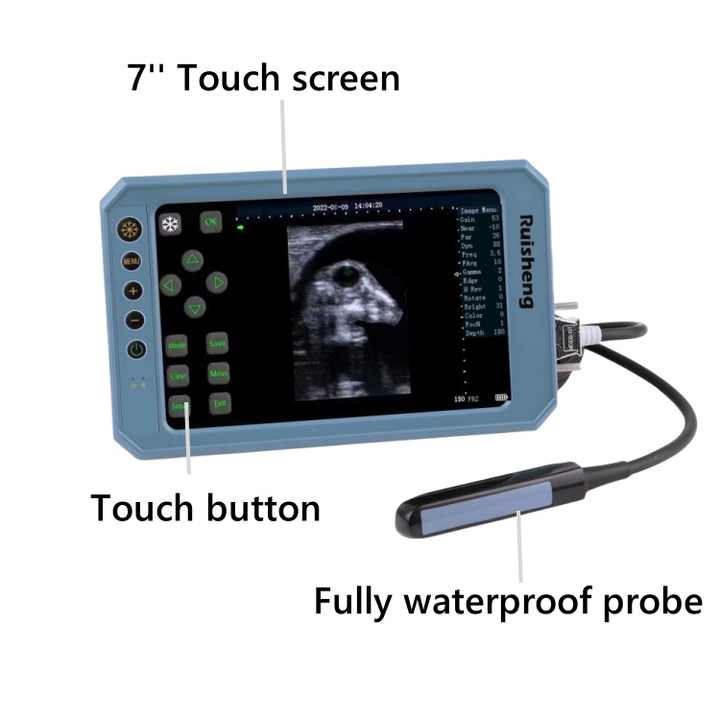
As a supplier of Veterinary Ultrasound Probes, we are committed to providing high - quality products that meet the needs of veterinarians. Our Portable Ultrasound Probe is designed to offer excellent image quality and ease of use. It is equipped with advanced technology that can help overcome some of the challenges associated with ear examinations, such as improving image resolution and reducing artifacts.
We also understand the importance of training and support. That's why we offer training programs for veterinarians to help them learn how to use our ultrasound probes effectively for ear disease detection. Our team of experts is available to provide technical support and answer any questions that veterinarians may have.
Conclusion and Call to Action
In conclusion, veterinary ultrasound probes have the potential to be a valuable tool for detecting ear diseases in animals. While there are challenges and limitations, the non - invasiveness, real - time imaging capability, and portability of ultrasound make it an attractive option for veterinarians.
If you're a veterinarian looking to enhance your diagnostic capabilities for ear diseases in animals, we invite you to explore our range of Veterinary Ultrasound Probes. Our products are designed to provide accurate and reliable results, and we are dedicated to providing the support and training you need to make the most of this technology. Contact us today to start a discussion about how our ultrasound probes can benefit your practice.
References
- Silverstein, D. C., Hopper, K., & Hopper, C. K. (2005). Small Animal Ear Diseases: A Color Atlas and Therapeutic Guide. Elsevier Health Sciences.
- Thrall, D. E., & Robertson, J. S. (2012). Textbook of Veterinary Diagnostic Radiology. Elsevier Health Sciences.
- Suter, P. F., & Herrtage, M. E. (2004). Diagnostic Ultrasound in Small Animal Practice. Saunders.