

How accurate is a portable ultrasound probe?
Portable ultrasound probes have revolutionized the field of medical and veterinary diagnostics by providing real - time imaging capabilities in a convenient, on - the - go package. As a supplier of Portable Ultrasound Probes, I often encounter questions about their accuracy. This blog aims to delve into the factors that influence the accuracy of these devices and provide a comprehensive understanding of their performance.
Understanding Portable Ultrasound Probes
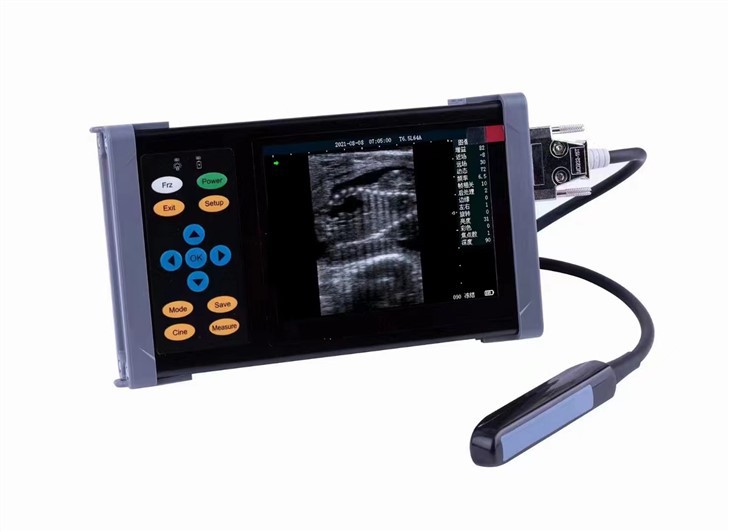
Portable ultrasound probes work on the same fundamental principle as traditional, larger ultrasound machines. They emit high - frequency sound waves into the body, and when these waves encounter different tissues, they bounce back as echoes. These echoes are then converted into images by the probe's software. Portable probes are designed to be lightweight, easy to carry, and often connect to smartphones or tablets, enabling quick and accessible imaging in various settings, such as clinics, farms, or in the field during emergencies.
Factors Affecting the Accuracy of Portable Ultrasound Probes
1. Transducer Technology
The transducer is the heart of an ultrasound probe. It is responsible for generating and receiving the sound waves. High - quality transducers with advanced piezoelectric materials can produce more accurate and detailed images. In portable probes, manufacturers strive to balance the size, power consumption, and image quality of the transducer. Some of our portable probes are equipped with state - of - the - art transducers that can provide high - resolution images comparable to those of larger, stationary machines. However, due to size limitations, there may still be some differences in the depth of penetration and the ability to image deep - seated structures compared to traditional machines.
2. Frequency Range
The frequency of the sound waves emitted by the probe affects the image resolution and penetration depth. Higher frequencies provide better resolution but have limited penetration, while lower frequencies can penetrate deeper but offer lower resolution. Portable ultrasound probes usually have a variable frequency range to accommodate different imaging needs. For example, in superficial imaging, such as examining the skin or small organs, a higher frequency can be used to obtain detailed images. In contrast, when imaging deeper structures like the liver or kidneys, a lower frequency is more appropriate. Our portable probes are designed with a wide frequency range to ensure accurate imaging in various scenarios.
3. Software and Image Processing
The software used in portable ultrasound probes plays a crucial role in image quality and accuracy. Advanced image - processing algorithms can enhance the clarity of the images, reduce noise, and improve the visualization of anatomical structures. Some of our probes come with intelligent software that can automatically adjust the image settings based on the type of tissue being imaged. This not only simplifies the operation for the user but also improves the accuracy of the diagnosis. Additionally, software updates can be provided to continuously improve the performance of the probes over time.
4. Operator Skill
The accuracy of ultrasound imaging is also highly dependent on the skill and experience of the operator. Even the most advanced portable ultrasound probe may not provide accurate results if the operator does not know how to position the probe correctly, adjust the settings appropriately, or interpret the images accurately. We offer training programs for our customers to ensure that they can make the most of our portable ultrasound probes. These training sessions cover the basics of ultrasound physics, probe operation, and image interpretation.
Accuracy in Different Applications
1. Medical Applications
In human medicine, portable ultrasound probes are used for a wide range of applications, including obstetrics, gynecology, cardiology, and emergency medicine. In obstetrics, they can be used to monitor the development of the fetus, detect fetal abnormalities, and determine the position of the placenta. Our portable probes have been shown to provide accurate measurements of fetal size and gestational age, which are crucial for proper prenatal care. In emergency medicine, portable ultrasound can quickly assess internal injuries, such as bleeding in the abdomen or chest, allowing for rapid decision - making and treatment.
2. Veterinary Applications
Portable ultrasound probes are also widely used in veterinary medicine. They offer a non - invasive way to diagnose various conditions in animals. For example, in equine medicine, Equine Ultrasound Machine can be used to examine the reproductive system, detect musculoskeletal injuries, and diagnose internal organ diseases. Our portable probes are popular among veterinarians due to their portability and accuracy in equine imaging. Similarly, Handheld Veterinary Ultrasound devices are used for small animal clinics to examine the heart, liver, kidneys, and other organs. In addition, Portable Ultrasound Scanner Veterinary Pregnancy can accurately detect pregnancy in livestock, which is essential for efficient herd management.
Comparing Portable and Traditional Ultrasound Machines
While portable ultrasound probes offer many advantages in terms of convenience and portability, it is important to note that they may not always be as accurate as traditional, larger ultrasound machines in certain situations. Traditional machines typically have more powerful transducers, larger displays, and more advanced software, which can provide higher - quality images, especially for complex cases or deep - seated structures. However, for many routine examinations and in situations where immediate access to imaging is required, portable ultrasound probes can provide sufficient accuracy.
Ensuring the Accuracy of Portable Ultrasound Probes
To ensure the accuracy of our portable ultrasound probes, we follow strict quality control procedures during the manufacturing process. Each probe is thoroughly tested to meet international standards for image quality, sensitivity, and reliability. We also provide regular calibration services to maintain the performance of the probes over time. Additionally, we are constantly researching and developing new technologies to improve the accuracy and functionality of our products.
Conclusion
In conclusion, portable ultrasound probes can be highly accurate when used correctly. The accuracy is influenced by various factors, including transducer technology, frequency range, software, and operator skill. While they may not replace traditional ultrasound machines in all cases, they offer a valuable alternative for many applications, especially in situations where portability and immediate access to imaging are essential. As a supplier of Portable Ultrasound Probes, we are committed to providing high - quality products that offer accurate and reliable imaging solutions.
If you are interested in our portable ultrasound probes or have any questions about their accuracy and performance, please feel free to contact us for further discussion and potential procurement. We are always ready to assist you in finding the best ultrasound solution for your needs.

References
- Bushberg, J. T., Seibert, J. A., Leidholdt, E. M., & Boone, J. M. (2012). The essential physics of medical imaging. Lippincott Williams & Wilkins.
- Goldberg, B. B., & Liu, J. (2013). Diagnostic ultrasound: principles and instruments. Elsevier Health Sciences.
- Fleischer, A. C., & Pollack, J. M. (2016). Ultrasound: the requisites. Elsevier.