

What is the dynamic range of veterinary ultrasound probes?
The dynamic range of veterinary ultrasound probes is a critical parameter that significantly influences the quality and diagnostic value of ultrasound imaging in veterinary medicine. As a dedicated supplier of Veterinary Ultrasound Probes, I am excited to delve into this topic and share valuable insights with fellow veterinarians, researchers, and animal healthcare professionals.
Understanding Dynamic Range in Veterinary Ultrasound
Dynamic range in the context of veterinary ultrasound refers to the ratio between the maximum and minimum signal amplitudes that an ultrasound probe can detect and process. It is typically measured in decibels (dB). A wider dynamic range means that the probe can simultaneously display both very strong and very weak echoes, providing a more comprehensive view of the internal structures of the animal's body.
In veterinary ultrasound, different tissues and structures produce echoes of varying intensities. For example, highly reflective structures such as bones and air - filled organs generate strong echoes, while soft tissues like muscles and internal organs produce relatively weaker echoes. A probe with a high dynamic range can accurately represent these differences, allowing veterinarians to clearly visualize both the bright, highly reflective areas and the darker, less reflective regions in the ultrasound image.
Importance of Dynamic Range in Veterinary Diagnosis
- Enhanced Tissue Differentiation
A wide dynamic range enables better differentiation between different types of tissues. This is crucial for accurately identifying normal and abnormal structures. For instance, in the diagnosis of liver diseases, a probe with a high dynamic range can clearly distinguish between healthy liver tissue, which has a characteristic echogenicity, and diseased tissue, which may have altered echogenic properties. This helps veterinarians to detect early signs of liver damage, such as fibrosis or tumors. - Detection of Small Lesions
Small lesions or abnormalities often produce weak echoes. A probe with a sufficient dynamic range can pick up these faint signals, increasing the likelihood of early detection. In the case of small tumors in the kidneys or the reproductive organs of animals, a high - dynamic - range probe can make these lesions visible, which might otherwise be missed with a probe having a narrow dynamic range. - Imaging in Different Animal Sizes and Species
Veterinary medicine deals with a wide variety of animal species, from small rodents to large horses. Different animals have different tissue densities and acoustic properties. A probe with a wide dynamic range can adapt to these variations, providing high - quality images across different animal sizes and species. For example, when imaging a small dog's heart, the probe needs to be able to detect the relatively weak echoes from the thin heart walls, while when imaging a large horse's abdomen, it must also handle the stronger echoes from the larger and denser organs.
Factors Affecting the Dynamic Range of Veterinary Ultrasound Probes
- Transducer Technology
The type of transducer used in the ultrasound probe plays a significant role in determining its dynamic range. Modern piezoelectric transducers are designed to have a wide frequency response, which allows them to detect a broader range of signal amplitudes. For example, multi - element transducers can be configured to optimize the dynamic range for different imaging applications. - Signal Processing Algorithms
Advanced signal processing algorithms are used to enhance the dynamic range of the ultrasound images. These algorithms can amplify weak signals while preventing the saturation of strong signals. Digital signal processing techniques, such as logarithmic compression, are commonly used to compress the wide range of signal amplitudes into a more manageable range for display on the ultrasound monitor. - Probe Design and Construction
The physical design and construction of the probe also affect its dynamic range. Factors such as the size and shape of the transducer elements, the impedance matching layer, and the backing material can all influence the probe's ability to detect and process signals. A well - designed probe with proper acoustic coupling and minimal signal loss will have a better dynamic range.
Applications of High - Dynamic - Range Veterinary Ultrasound Probes
- Reproductive Imaging
In veterinary reproductive medicine, high - dynamic - range probes are essential for accurate pregnancy diagnosis, monitoring fetal development, and detecting reproductive disorders. For example, in equine reproduction, Equine Ultrasound Machine equipped with high - dynamic - range probes can clearly visualize the developing fetus, the placenta, and any potential abnormalities in the mare's reproductive tract. - Musculoskeletal Imaging
When diagnosing musculoskeletal injuries in animals, such as tendon and ligament damage, a high - dynamic - range probe can provide detailed images of the soft tissues. It can help veterinarians to identify the extent of the injury, such as partial or complete tears, and monitor the healing process over time. - Cardiac Imaging
In veterinary cardiology, a probe with a wide dynamic range is crucial for visualizing the heart's chambers, valves, and blood flow. It allows veterinarians to accurately assess cardiac function, detect congenital heart defects, and monitor the progression of heart diseases. For example, in small animals, Portable Ultrasound For Horse can be used to obtain high - quality cardiac images, which are essential for early diagnosis and treatment planning.
Our Company's Veterinary Ultrasound Probes and Dynamic Range
As a leading supplier of Veterinary Ultrasound Probes, we are committed to providing products with exceptional dynamic range. Our probes are equipped with the latest transducer technology and advanced signal processing algorithms to ensure high - quality imaging across a wide range of veterinary applications.
We offer a diverse range of probes, including linear, convex, and phased - array probes, each designed to meet the specific needs of different imaging scenarios. Our Veterinary Portable Ultrasound Scanner is a compact and versatile solution that combines high - performance probes with advanced imaging capabilities.
Conclusion
The dynamic range of veterinary ultrasound probes is a key factor in providing accurate and detailed diagnostic images in veterinary medicine. A wide dynamic range allows for better tissue differentiation, early detection of lesions, and imaging across different animal sizes and species. As a supplier of Veterinary Ultrasound Probes, we understand the importance of this parameter and strive to offer products that meet the highest standards of quality and performance.
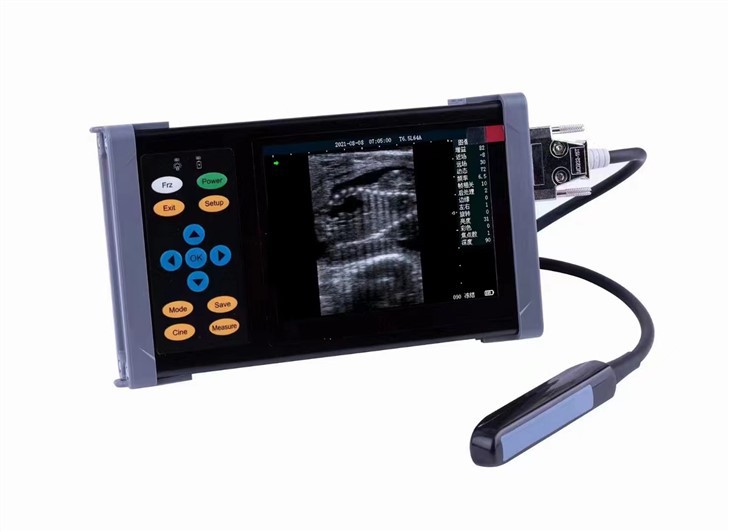

If you are interested in learning more about our veterinary ultrasound probes or would like to discuss your specific imaging needs, we encourage you to reach out to us for a detailed consultation. Our team of experts is ready to assist you in finding the best solution for your veterinary practice.
References
- Bushberg, J. T., Seibert, J. A., Leidholdt, E. M., & Boone, J. M. (2012). The essential physics of medical imaging. Lippincott Williams & Wilkins.
- Fleischer, A. C., & Hill, M. C. (1985). Ultrasound: The requisites. Mosby.
- Rumack, C. M., Wilson, S. R., & Charboneau, J. W. (2010). Diagnostic ultrasound. Elsevier Health Sciences.