

What is the role of an Equine Ultrasound Machine in equine reproduction management?
Hey there, fellow horse enthusiasts! As a supplier of Equine Ultrasound Machines, I've seen firsthand how these nifty devices play a crucial role in equine reproduction management. So, let's dive right in and explore what makes these machines so important.
Early Pregnancy Detection
One of the most significant roles of an Equine Ultrasound Machine is early pregnancy detection. In the horse - breeding world, time is of the essence. With traditional methods, it can be quite challenging to determine if a mare is pregnant in the early stages. But with an ultrasound machine, vets can detect pregnancy as early as 10 - 14 days after breeding.
This early detection is a game - changer. If a mare is confirmed pregnant, proper care and management can be initiated right away. The mare's diet can be adjusted, and any necessary supplements can be provided. On the other hand, if the mare is not pregnant, breeders can quickly decide on the next breeding attempt, saving time and money. For example, if a mare is not pregnant after the first breeding, breeders can re - breed her during the next estrus cycle without waiting too long.
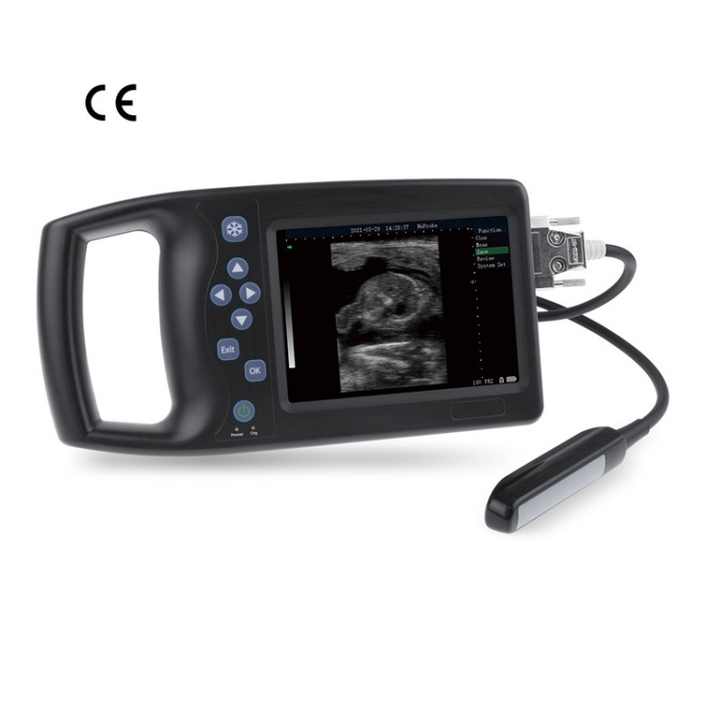
You can check out our Portable Ultrasound For Horse which is perfect for this kind of early pregnancy detection. It's easy to use and provides clear images, allowing vets to make accurate diagnoses.
Monitoring Fetal Development
Once pregnancy is confirmed, the Equine Ultrasound Machine continues to be a valuable tool for monitoring fetal development. Vets can use it to check the size, position, and overall health of the fetus throughout the pregnancy.
In the early stages, they can assess the number of embryos. Twin pregnancies in horses are often problematic as they can lead to complications such as abortion, premature birth, or foal mortality. With an ultrasound, vets can detect twin pregnancies early and may take steps to reduce the number of embryos to a single one, increasing the chances of a successful pregnancy.
As the pregnancy progresses, the ultrasound can show the growth rate of the fetus. If the fetus is not growing at the expected rate, it could be a sign of a problem, such as placental insufficiency or a genetic disorder. Early detection of these issues allows for appropriate interventions, which may include changing the mare's diet, administering medications, or providing additional veterinary care.
Our Portable Ultrasound Scanner Veterinary Pregnancy is a great option for continuous fetal monitoring. It's portable, so it can be easily taken to the mare's location, whether it's in a stable or a pasture.
Evaluating Reproductive Organs
Equine Ultrasound Machines are also used to evaluate the reproductive organs of both mares and stallions. In mares, the ultrasound can be used to assess the ovaries and uterus. It can detect follicles on the ovaries, which are important for determining the mare's estrus cycle. By monitoring the size and development of follicles, vets can predict when ovulation will occur, allowing breeders to time breeding more accurately.
The ultrasound can also detect any abnormalities in the uterus, such as cysts, adhesions, or infections. These issues can affect the mare's fertility and pregnancy success. Early detection of uterine problems allows for appropriate treatment, which may include antibiotics, anti - inflammatory medications, or surgical intervention.
For stallions, the ultrasound can be used to evaluate the testicles. It can detect any structural abnormalities, such as tumors or varicoceles, which can affect sperm production and quality. By identifying these issues early, breeders can take steps to manage the stallion's fertility, such as adjusting his diet, providing appropriate medications, or using artificial insemination techniques.
If you're also interested in using ultrasound for other animals, we have Portable Ultrasound For Dogs. It's a versatile device that can be used in different veterinary settings.
Assisting with Artificial Insemination
Artificial insemination (AI) is a common practice in equine breeding. An Equine Ultrasound Machine plays a vital role in this process. As mentioned earlier, it helps in determining the optimal time for insemination by monitoring follicle development in the mare.
In addition, during the insemination process, the ultrasound can be used to guide the insemination catheter into the uterus. This ensures that the semen is deposited in the correct location, increasing the chances of fertilization. The ultrasound can also be used to confirm that the semen has been successfully deposited in the uterus.
Improving Breeding Efficiency
Overall, the use of an Equine Ultrasound Machine significantly improves breeding efficiency. By providing accurate and timely information about pregnancy, fetal development, and reproductive organ health, breeders can make more informed decisions. They can reduce the number of unsuccessful breeding attempts, increase the number of successful pregnancies, and ultimately produce healthier foals.
This not only benefits individual breeders but also has a positive impact on the equine industry as a whole. With better breeding management, the quality of horses can be improved, leading to better performance in various equestrian sports and activities.
Conclusion
In conclusion, an Equine Ultrasound Machine is an indispensable tool in equine reproduction management. From early pregnancy detection to monitoring fetal development, evaluating reproductive organs, assisting with artificial insemination, and improving breeding efficiency, its uses are vast and far - reaching.
If you're involved in equine breeding, I highly recommend investing in a high - quality Equine Ultrasound Machine. Our products are designed to meet the needs of both small - scale breeders and large - scale equine operations. They are reliable, easy to use, and provide clear and accurate images.

If you're interested in learning more about our Equine Ultrasound Machines or have any questions about how they can benefit your breeding program, feel free to reach out. We're here to help you make the most of your equine breeding efforts.
References
- McKinnon, A. O., & Voss, J. L. (Eds.). (2011). Equine Reproduction. Wiley - Blackwell.
- Ginther, O. J. (2007). Reproductive Biology of the Mare: Basic and Applied Aspects. Equiservices.