

What is the spatial resolution of veterinary ultrasound probes?
Hey there, fellow animal lovers and veterinary pros! I'm stoked to be here, chatting with you about one of the most crucial aspects of veterinary ultrasound: the spatial resolution of veterinary ultrasound probes. As a supplier of Veterinary Ultrasound Probes, I've seen firsthand how this technology can revolutionize animal healthcare. So, let's dive in and explore what spatial resolution is all about.
What's Spatial Resolution Anyway?
Spatial resolution in veterinary ultrasound is all about how clearly we can see the details of an animal's internal structures. Think of it like the sharpness of a photo. The higher the spatial resolution, the clearer and more detailed the image. This is super important because it allows vets to spot even the tiniest abnormalities, like small tumors or early signs of disease.
There are two main types of spatial resolution: axial and lateral. Axial resolution is the ability to distinguish between two objects that are lined up along the path of the ultrasound beam. In simpler terms, it's how well we can tell apart two things that are one in front of the other. Lateral resolution, on the other hand, is the ability to distinguish between two objects that are side by side.
Why Does Spatial Resolution Matter in Vet Ultrasound?
In the world of veterinary medicine, accurate diagnosis is everything. A high - resolution ultrasound image can make the difference between a successful treatment and a missed opportunity. For example, when checking a pregnant mare, a clear image with good spatial resolution can help the vet count the number of foals, check their health, and detect any potential complications early on.
In small animals, like cats and dogs, high - resolution ultrasound can be used to examine the heart, liver, kidneys, and other organs. It can help identify problems such as kidney stones, liver cysts, or heart valve issues. The better the spatial resolution, the more accurate the diagnosis, and the better the chances of a positive outcome for the animal.
Factors Affecting Spatial Resolution
Now, let's talk about what affects the spatial resolution of veterinary ultrasound probes. One of the most important factors is the frequency of the ultrasound waves. Higher frequency probes generally offer better spatial resolution because they produce shorter wavelengths. Shorter wavelengths can create more detailed images, but they have a shorter penetration depth. So, for deeper structures, lower frequency probes are often used, even though they have lower spatial resolution.
The design of the probe also plays a big role. Probes with more elements can produce better - focused beams, which improves both axial and lateral resolution. Additionally, the quality of the electronics in the probe and the ultrasound machine can impact the final image quality.
Our Range of Veterinary Ultrasound Probes
At our company, we offer a wide range of Veterinary Ultrasound Probes designed to meet the diverse needs of veterinarians. Whether you're working with large animals like horses and cows or small pets like rabbits and guinea pigs, we've got you covered.
Our high - frequency probes are perfect for examining superficial structures, like the eyes, thyroid glands, or skin. They offer excellent axial and lateral resolution, allowing you to see the smallest details. For deeper structures, our low - frequency probes provide good penetration while still maintaining a reasonable level of resolution.
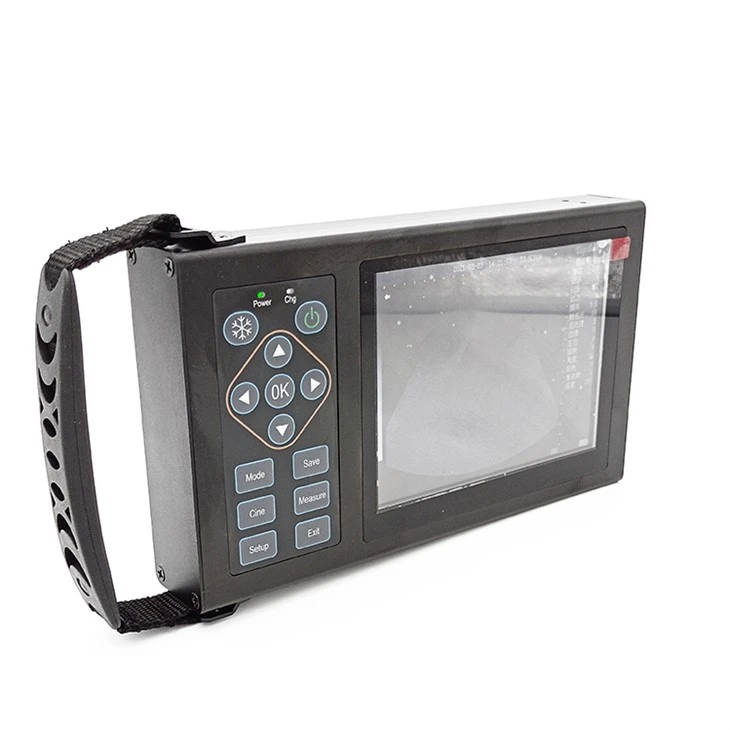
We also have specialized probes for specific applications. For example, our Portable Ultrasound Scanner Veterinary Pregnancy probes are designed to accurately detect pregnancy in various animals. These probes are easy to use and provide clear images of the developing fetuses.
And if you need to examine different types of animals, our Portable Veterinary Ultrasound For Various Animals is a great option. It comes with multiple probes that can be used for different species and different anatomical regions.
How to Choose the Right Probe for Your Needs
Choosing the right veterinary ultrasound probe can be a bit tricky, but don't worry, I'm here to help. First, think about the type of animals you'll be working with. If you mainly deal with large animals, you'll need probes with good penetration and a wider field of view. For small animals, high - frequency probes with better resolution are usually more appropriate.
Next, consider the specific applications. If you're doing a lot of pregnancy checks, a probe designed for that purpose will be a great investment. If you're interested in examining the heart, a probe with good Doppler capabilities might be necessary.
Finally, think about your budget. While high - end probes offer the best performance, there are also more affordable options that can still provide decent image quality.

The Future of Spatial Resolution in Vet Ultrasound
The field of veterinary ultrasound is constantly evolving, and we can expect some exciting developments in spatial resolution in the future. New technologies, like advanced beam - forming algorithms and improved transducer materials, are being developed to further enhance image quality.
We might also see more integration of artificial intelligence (AI) in ultrasound imaging. AI can help analyze the images and highlight potential abnormalities, making the diagnostic process even more accurate and efficient.
Let's Talk Business!
If you're in the market for high - quality veterinary ultrasound probes, we'd love to hear from you. Our team of experts is always ready to help you choose the right probes for your practice. Whether you're a small animal clinic, a large - animal farm, or a research institution, we have the products and the knowledge to meet your needs.
Don't hesitate to reach out and start a conversation with us. We're confident that our Veterinary Ultrasound Probes will exceed your expectations and help you provide the best possible care for your animal patients.
References
- Bushberg, J. T., Seibert, J. A., Leidholdt, E. M., & Boone, J. M. (2012). The essential physics of medical imaging. Lippincott Williams & Wilkins.
- McDicken, W. N., & Reid, J. M. (2005). Diagnostic ultrasound: principles and instruments. CRC Press.